This lesson will describe the three “states of mind” that we experience, including reasonable mind, emotion mind, and wise mind. Wise mind is the “middle path” that balances reasonable mind and emotion mind.
Resources
from “DBT Skills Training Handouts and Worksheets” by Marsha M. Linehan
- Wise Mind (p. 50-52)
Wise Mind
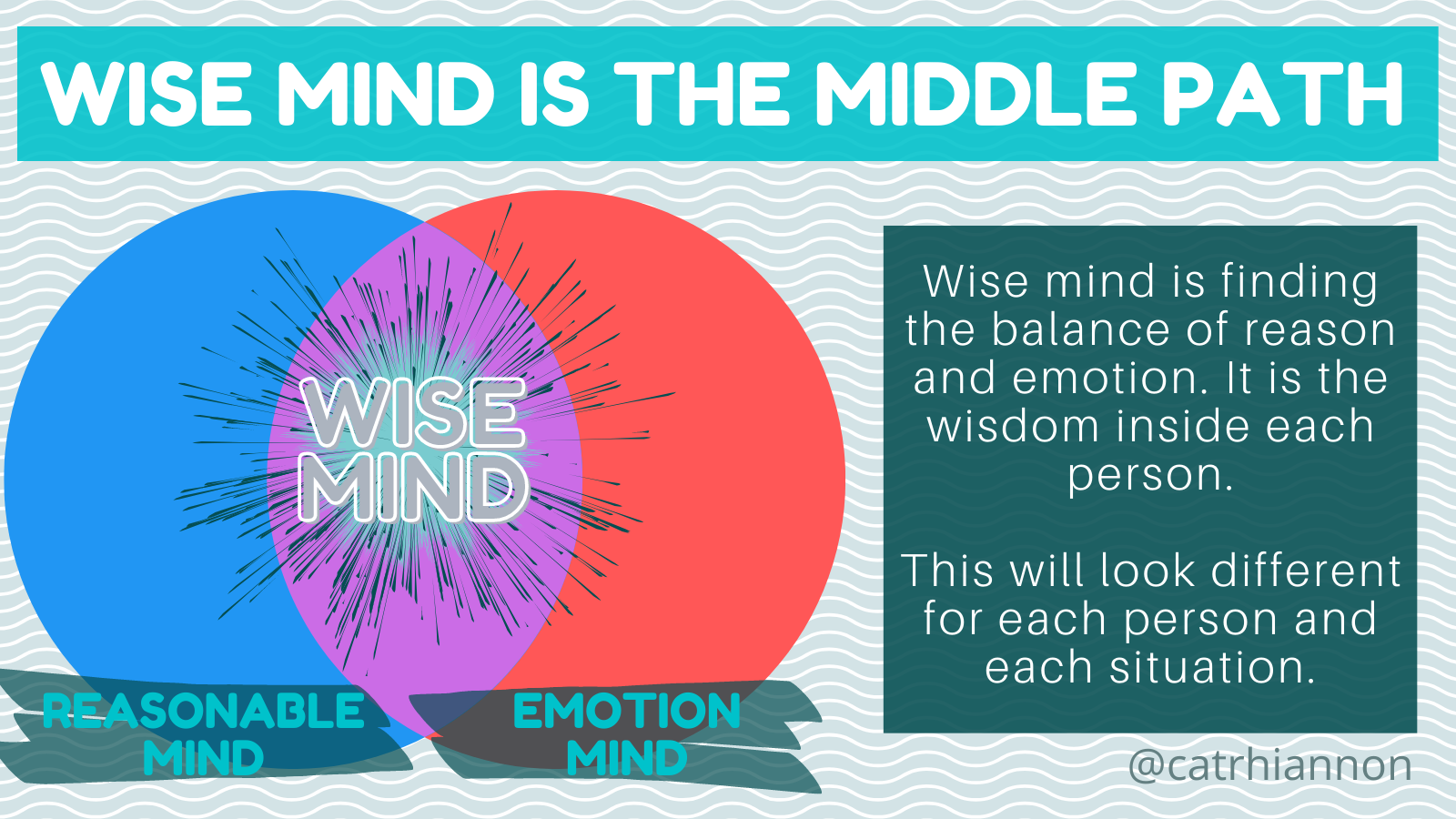
DBT describes three “states of mind” that we experience: reasonable mind, emotion mind, or wise mind. This idea is usually illustrated as a venn diagram, where “wise mind” is the overlapping area between the circles of “reasonable mind” and “emotion mind”.
Wise mind lies somewhere between reasonable mind and emotion mind. Wise mind is considered to be the “middle path”, which balances the values of reasonable mind and emotion mind.
Reasonable mind is very rational and task-focused, whereas emotion mind is mood-dependent and emotion-focused. Both states of mind are helpful and effective in certain situations, but it’s usually ineffective to spend all of your time in reasonable mind or emotion mind.
Marsha Linehan: “Wise Mind”
Connecting with Wise Mind
Wise mind will look a little different in each situation because every situation in life calls for a different balance of reason and emotion. You can use mindfulness to help balance your mind and to “connect” with wise mind.
Wise mind could also be called intuition, inner wisdom, inner knowing, a “gut feeling”, spiritual guidance, etc. In my experience, wise mind tends to come with a calm sense of just knowing. I will still experience pain if I’m going through something distressing; but by balancing reason AND emotion in the moment, I’m able to accept a situation with more grace.
Suggested Homework
Wise Mind Practice (p. 83); OR complete 2 mindfulness exercises
Example Mindfulness Exercises
- Guided Meditations (such as this 10 Minute Guided Meditation for Becoming More Mindful [YouTube])
- Body Scan (such as this Guided Body Scan Meditation [YouTube])
- Ask yourself, “Is this Wise Mind?”
- Attend to your breathing
- Try some of these 13 Ways to Be More Mindful [YouTube]
 Cassia