We will look at a psychological theory called the “biosocial theory”. This theory suggests that the reason that some people experience issues with emotion regulation is a combination of biological and social factors.
Resources
from “DBT Skills Training Handouts and Worksheets” by Marsha M. Linehan
- Biosocial Theory (p. 14-15)
Biosocial Theory
Biosocial Theory aims to explain why some people experience so much difficulty with regulating their emotions and their actions.
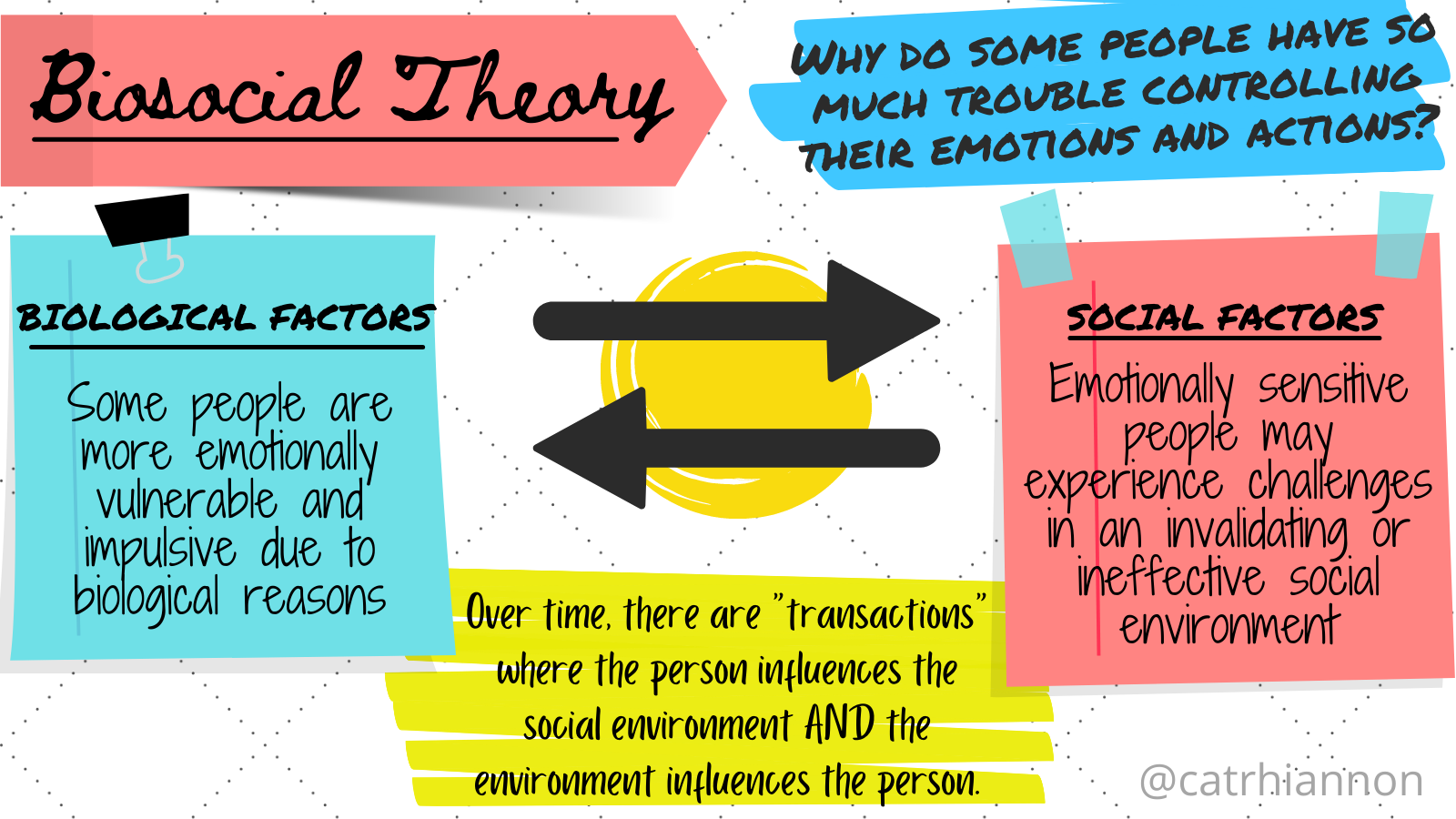
According to Biosocial Theory, someone may experience emotion dysregulation due to both biological factors AND social factors. Biological factors and social factors may also influence or reinforce emotion dysregulation.
Biological Factors
This theory suggests that that some people may be more emotionally vulnerable and impulsive due to biological reasons; it’s just the way that they were born. People like this may be very sensitive to emotional stimuli and experience emotion dysregulation. They experience intense emotions for a longer duration of time.
They may also struggle to restrain themselves from engaging in impulsive behaviors, making it difficult to be effective in their everyday life.
Social Factors
Biosocial Theory also says that these emotionally sensitive people may experience challenges when they’re put in an invalidating or ineffective social environment. An invalidating social environment is an environment where someone’s emotions are misunderstood, ignored/neglected, or put down. This could be an abusive environments, but it also includes environments where people are acting with their best intentions. People who invalidate might be unable to understand what an emotionally sensitive person is experiencing, or they may not know how to validate someone else. Thus, when an emotionally sensitive person is put into an invalidating environment, they may experience even more difficulties with regulating their emotions.
An ineffective social environment, on the other hand, is an environment that may reinforce out-of-control emotions and actions. In an ineffective social environment, an emotionally sensitive person may struggle to get their emotions recognized until their emotions escalate. If the people around them don’t respond when they have less intense emotions, the emotionally sensitive person may continue to experience the emotion until it escalates into more intense emotions and behaviors. Thus, they learn that they need to express intense, out-of-control emotions in order to get their needs met.
Transactions Between the Person and the Social Environment
At the core of Biosocial Theory is this idea that both biology AND the social environment influence this experience of being an emotionally sensitive person. Over time, there are “transactions” where the person influences the social environment, AND the environment influences the person.
Marsha Linehan: “How She Came to Develop DBT”
 Cassia