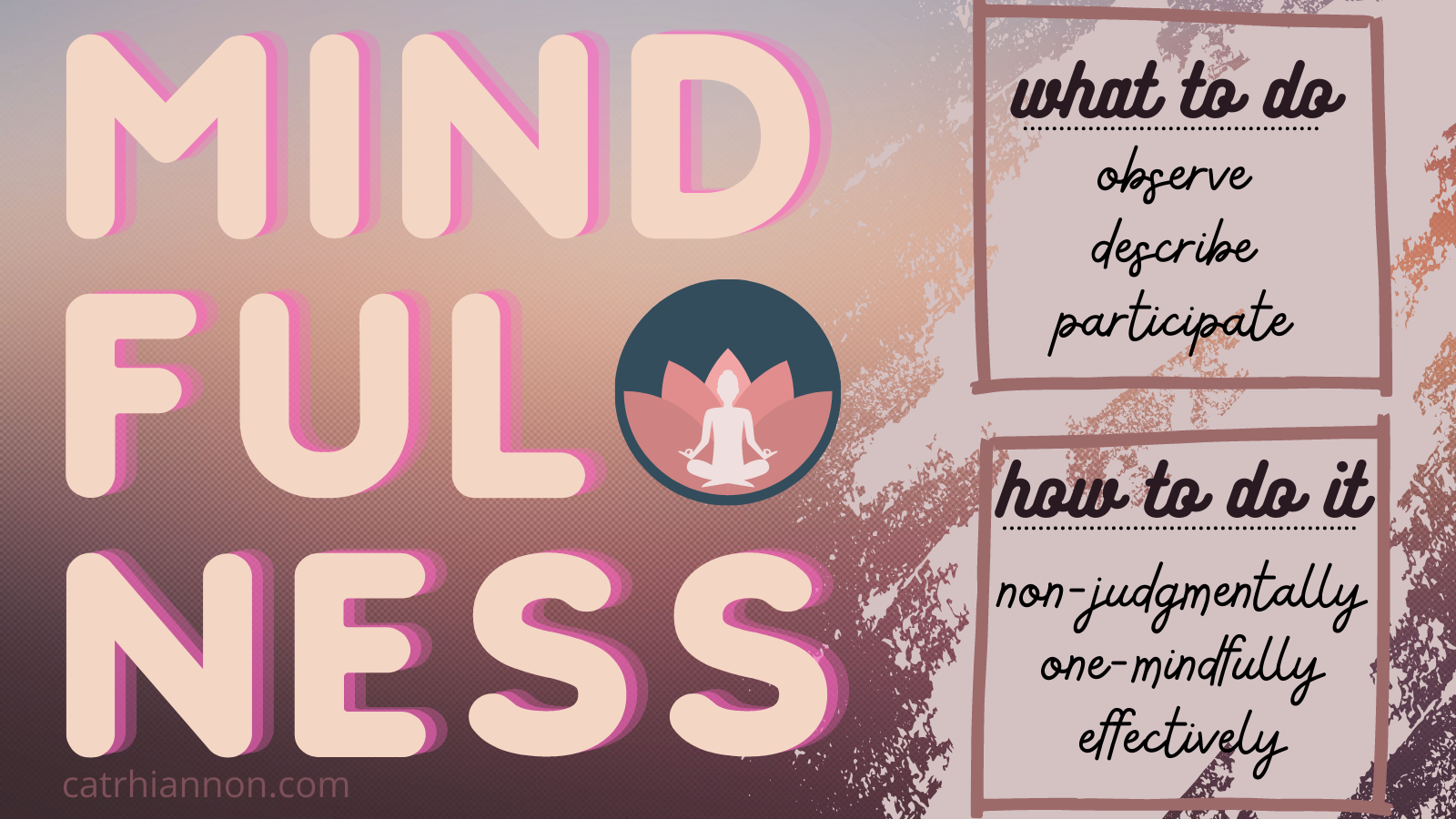
This lesson digs into some specific skills that you can use when you’re practicing mindfulness: the “what” and “how” skills. These skills describe what you should do, and how you should do it when you’re improving your mindfulness.
Resources
from “DBT Skills Training Handouts and Worksheets” by Marsha M. Linehan
- Taking Hold of Your Mind: “What” Skills (p. 53-59)
- Taking Hold of Your Mind: “How” Skills (p. 60-63)
“What” Skills
“What” skills in Dialectical Behavior Therapy (DBT) are a set of skills that help individuals better observe, describe, and understand their experiences in the present moment. These skills are the foundation of mindfulness practice in DBT and are designed to help individuals stay present and focused in the moment, rather than getting lost in their thoughts or emotions.
There are three “What” skills in DBT:
Observe: This skill involves simply noticing what is happening in the present moment without judgment or interpretation. It can be helpful to use your senses to observe your surroundings, such as noticing the colors and textures of objects or the sounds in the environment.
Describe: This skill involves putting words to what you observe. It can be helpful to use specific and concrete language to describe your experiences, rather than using vague or judgmental language.
Participate: This skill involves fully engaging in the present moment and being actively involved in your experiences. It can be helpful to focus on what you are doing in the moment, rather than worrying about the past or future.
By developing these “What” skills, individuals can become more aware of their experiences and better able to regulate their emotions and behaviors. These skills can be particularly helpful for individuals who struggle with impulsivity, emotional dysregulation, or other symptoms associated with borderline personality disorder (BPD) or other mental health conditions.
“How” Skills
Coming Soon!
Marsha Linehan: “What” and “How” Skills
Reasonable mind is very rational and task-focused, whereas emotion mind is mood-dependent and emotion-focused. Both states of mind are helpful and effective in certain situations, but it’s usually ineffective to spend all of your time in reasonable mind or emotion mind.
Suggested Homework
Mindfulness “What” Skills (p. 84) and Mindfulness “How” Skills (p.88)
 Cassia